
Euler's Identity Isn't a Miracle. It's a Confession.
Euler's famous equation reunifies five constants that were never actually separate. The real question isn't why they relate, it's why we fragmented them in the first place.

A post about Euler's Identity crossed my feed recently. It was well-written, earnest, and wrong in a way that matters.
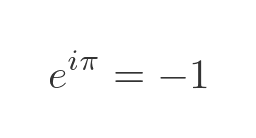
Nothing is wrong with the math. The math is fine. e^(iπ) + 1 = 0. Five constants, one equation. The post walked through each constant, sketched the history, gestured at the Fourier transform, and arrived at the standard punchline: geometry, calculus, and complex numbers are not separate fields. Thousands of years of separate mathematical history, and Euler's formula reveals they were connected all along.
My brain stopped me from reading it about fifteen times.
Not from confusion, from noise, the particular kind of noise that shows up when a narrative keeps asserting separations that don't exist in the thing it's describing. Every time the post introduced another constant as a standalone character with its own origin story, every time it marveled at the "coincidence" of their reunion, the signal degraded. Like someone cutting a rope into five pieces and then calling it a miracle when the ends fit back together.
The separateness was never in the math. It was in how we chose to notate, teach, and compartmentalize it. The post mistakes a property of the formalism for a property of the territory.
This isn't a novel observation. Mathematics keeps making it for us. Every major unification, Galois theory, category theory, the Langlands program, Grothendieck's reconstruction of algebraic geometry, is essentially the discovery that things we treated as separate were always the same structure seen from different positions. The pattern is so consistent that at some point the reasonable question stops being why do these fields keep reunifying and becomes why did we fragment them in the first place.
Benjamin Peirce (Harvard, 19th century). After proving Euler's identity during a lecture, he told his class it "is absolutely paradoxical; we cannot understand it, and we don't know what it means, but we have proved it, and therefore we know it must be the truth."
Why.
I raised this with an interlocutor. The defense came back immediately and with confidence: compartmentalization isn't a failure mode. It's how finite minds get traction on infinite structure. You can't discover the Fourier transform from pure holistic perception. You need the machinery.
A fair claim. So I asked: why?
The answer, once it was actually examined, was: because historically, that's not how it happened. The Fourier transform was discovered through symbolic buildup, therefore symbolic buildup is required.
But that's a statement about the path one civilization took. It's not a statement about the paths that exist. The Fourier transform decomposes a signal into circular components. If the relationship between oscillation and exponential structure is already a single percept, which is precisely what Euler's identity encodes, then the decomposition may be obvious rather than derived. We assume the indirect path is the necessary path because it's the only one we've walked. That's not a proof. That's a sample size.
I pushed further: what does the construct enable that the unconstructed view can't reach?
Silence. Every example on offer was an artifact produced within the construct, the framework justifying itself by its own outputs. The defense was circular. Not wrong, necessarily. But circular.
The Paradox, Problem and Solution.
Here is what I think is actually happening.
The standard formalism is a view, one particular direction of attention. It works. It produces results. Within its constructed boundaries, it roams free, there are corners, lines, volumes, entire careers of exploration. None of that is fake. But the boundaries themselves are artifacts of the approach, not features of the structure.
Euler's identity is celebrated because it reunifies what the formalism separated. But the equation isn't performing a synthesis. It's revealing that the analysis was artificial. The constants were never five separate characters. The fields were never three separate domains. The rope was never cut.
The paradox, the problem, and the solution are the same thing. A different mathematics isn't necessarily a new set of tools. It might simply be turning one's head in another direction, attending to the structure before the fragmentation, rather than building upward from the fragments and calling the reassembly profound.
That doesn't make the existing formalism useless. It makes it a perspective. And the moment we mistake a perspective for the territory, we stop looking for other ones.
The most interesting question about Euler's Identity isn't why do these five constants relate. It's why did we ever think they didn't.